Could Georgia be the next big opportunity in real estate? There are good reasons to ask the questions. For international buyers exploring whether to invest in Georgia, 2026 offers an interesting but selective opportunity. The country has gained international attention thanks to its growing economy, accessible ownership rules for many types of property, an established tourism sector, and housing markets serving different needs. Although a sound investment is always based on realistic data and careful resource management, we believe that purchasing real estate in Georgia can prove to be a highly profitable venture, as the country offers an attractive combination of affordable costs, quality of life, and low taxation.
Invest in the real estate market in Georgia
Georgia is attracting attention as an emerging economy. According to the National Statistics Office of Georgia (Geostat), real gross domestic product (GDP) increased by 7.5% in 2025 after 9.7% growth in 2024. These figures indicate substantial activity across the economy, although neighborhood-level demand can move differently from headline GDP.
Georgia’s location is the key to this success. The country is part of the transport route known as the “Middle Corridor,” which connects markets through the South Caucasus and the Caspian region. The potential of this connection between Europe and Asia is also seen by the World Bank, which views it as an excellent strategic point for expanding trade, improving transport links, and supporting long-term regional growth.
It is, therefore, undoubtedly a market worth exploring, which is why it is attracting an increasing number of international investors. Among them are multinational corporations and prominent figures such as Trump, with the construction of the Trump Tower in Tbilisi, as well as investors from the Emirates who are investing over 6 billion dollars in skyscrapers and luxury resorts.
Why is Georgia attracting international investors?
Over the last decade, Georgia has increasingly been highlighted as an attractive destination for international investment. In the previous paragraph we explored one of the key strengths, a factor that makes it a strategic location, despite the country’s relatively small size. But this economic development has created opportunities across numerous sectors, most notably in real estate, which is drawing many international investors thanks to low entry costs, streamlined bureaucracy, and robust economic growth.
Unlike many established real estate markets, where prices in major cities can pose a significant barrier to entry (as is the case, for instance, in Dubai), Georgia offers a range of price points, allowing investors to pursue diversified strategies. Furthermore, the tourism sector is expanding, which in turn drives demand for real estate. According to the Georgian National Tourism Administration, the country recorded approximately 5.52 million international tourist arrivals in 2025, generating revenue of roughly 4.69 billion US dollars.
A business-friendly country with a competitive tax system
The tax system of Georgia (in the Caucasus) is known for being one of the most streamlined and competitive in the world. The provisions governing Georgia’s financial framework are set out in the Tax Code. Georgia stands out also as an exceptionally advantageous hub for cryptocurrencies; such gains are considered income generated outside the country and are therefore not taxed. In fact, all income and capital gains earned by a resident individual outside of Georgian territory are not taxed in Georgia. It is, however, essential to verify precisely that the nature of the income is legally classified as foreign-sourced according to the criteria established by the Georgian Tax Code.
Corporate income tax and VAT
Georgia’s corporate income tax system is inspired by the Estonian model. For many companies, retained or reinvested profits are generally not taxed until distribution, allowing capital to remain available for business growth. The standard corporate income tax rate is 15%. Tax may also arise on certain transactions treated as distributions or expenses unrelated to business activity.
The standard VAT rate is 18%, with registration generally required once VAT-taxable transactions exceed GEL 100,000 over any 12 consecutive calendar months. Working with foreign companies does not automatically remove VAT obligations: treatment depends on the type of supply and the applicable place-of-supply rules. Many services supplied to foreign business customers fall outside Georgian VAT, but exceptions apply, including services connected with property in Georgia.
The 1% small business regime
Individual entrepreneurs who obtain small business status may benefit from a 1% tax on qualifying Georgian-source gross business income, rather than net profit. The standard annual threshold is GEL 500,000, roughly USD 190,000 depending on exchange rates. If this threshold is exceeded, the 3% rate applies to qualifying income from the beginning of the month in which it is crossed until the end of that calendar year, rather than only to the amount above the limit.
Exceeding the applicable threshold in each of two consecutive calendar years leads to loss of small business status from the following year. The ordinary income-tax regime may then apply, generally at 20% of taxable business income after allowable deductions. Certain activities are excluded from the preferential regime, including medical practice, legal services and gambling. Monthly declarations and tax payments are due by the 15th of the following month. This regime can be attractive to eligible entrepreneurs and digital nomads considering Georgia as a business base, although eligibility depends on their actual activities and income.
Property taxes, sales and buying options
Georgia distinguishes between annual property tax and tax on a gain from selling property. For individuals, taxable gains from selling a residential apartment or house with attached land are generally taxed at 5%. An exemption may apply when the property has been owned for more than two years, subject to the statutory conditions. The same treatment should not be assumed for every type of commercial property or business transaction.
As of October 2026, individuals qualify for an annual property-tax exemption on taxable property other than land if their family’s income in the previous year does not exceed GEL 100,000, roughly USD 38,000 depending on exchange rates. This is a conditional exemption, so describing property tax as universally “0%” would be misleading.
Property purchases can also be arranged using cryptocurrency where the seller supports it. Some developers, including Alliance Group for selected projects, accept Bitcoin or USDT; another option is to convert cryptocurrency into fiat currency before purchasing. Foreign citizens can generally buy apartments, houses and commercial premises without holding Georgian residency, and purchases can be completed remotely through the appropriate legal arrangements. Agricultural land is subject to separate ownership restrictions.
Tbilisi or Batumi: which market fits your strategy?
Most foreign buyers end up choosing between two big cities, which are Batumi, the Black Sea resort, and Tbilisi, the capital. Their average gross yields are nearly identical; the substantial differences, therefore, lie elsewhere: in the profile of the tenants and the times of year they rent, as well as in the profile of the buyers and what can be acquired based on one’s budget.
Tbilisi: a city with year-round demand

Tbilisi is the country’s capital and the largest urban center. It attracts a lot of visitors, students, and businesses every year; thus, for an investor looking for a long-term tenant, this year-round base can make it easier to evaluate demand without relying mainly on summer tourists. If you are looking to buy a home, you will need to apply a precise strategy; factors such as parking, transport links, and the size of the building are very important to evaluate when considering an investment of this kind.
A smaller apartment, located near efficient transport links, may prove to be a better choice than a larger unit. It may be useful to consult the official Geostat Residential Property Price Index, a helpful long-term indicator of real estate prices. In the second quarter of 2026, the index for newly built apartments and detached houses in Tbilisi was 63.8% higher than the 2020 average, representing a 4.9% year-on-year increase. Prices are generally higher due to the city’s administrative and service nature compared to other cities.
Batumi: the “Dubai of the Black Sea”

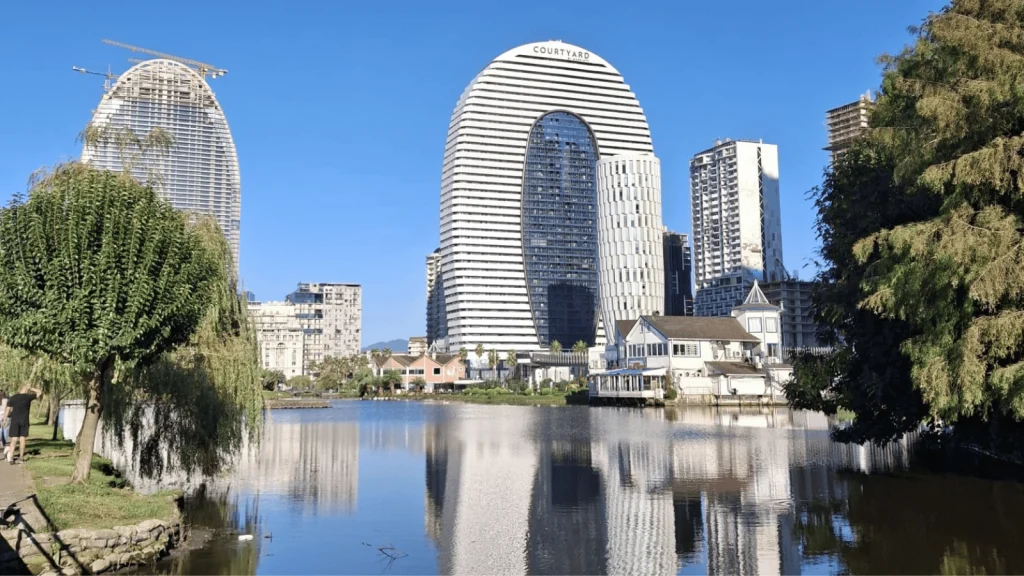
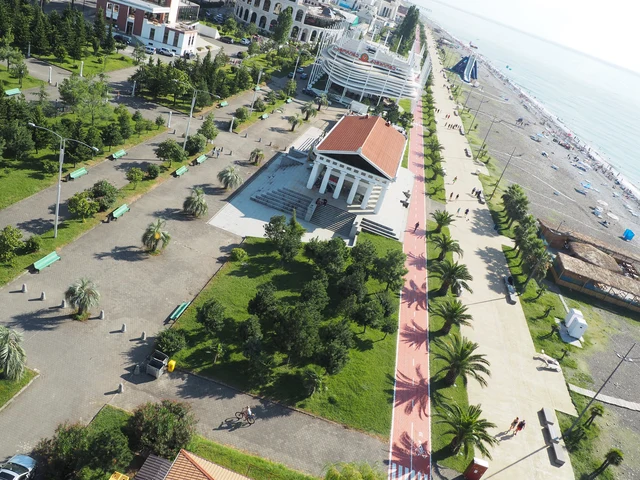
Batumi has gained the nickname “Dubai of the Black Sea” as it is expanding very quickly; the skyline is changing with high-rise residential buildings, hotels, and new amenities along the coast. Batumi appeals to holidaymakers and overseas buyers. According to market research by Galt & Taggart, 17,478 real estate transactions were recorded in 2025, an increase of approximately 15% over the previous year, with a total value of around $1.3 billion. But seasonality here is crucial. A flat that performs well in summer may have a very different occupancy rate in winter, and investors should make their calculations across the full year.
In August 2026, foreigners made 52% of Batumi’s apartment transactions. Batumi might seem like the most interesting option, also considering that the prices are lower, but oversupply is one of the main concerns. Between 2025 and 2029, an estimated 45,000 to 58,000 new apartments are slated for delivery in Batumi. For a city of its geographical footprint, this is an incredibly dense influx of inventory.
How much does an apartment cost in Georgia?
One reason international buyers explore property investment in Georgia is the comparatively accessible cost of entering the market. There is no single price for a Georgian apartment, but according to Galt & Taggart’s market research, in September 2025, average turnkey apartment prices in Batumi reached approximately $1,821 per square meter for new developments and $1,418 for secondary-market properties.
The cost of living in Georgia can also be lower than in many Western European cities. The purchase price is only the beginning of the budget. It must account for the total costs involved, including due diligence, registration fees, contract translation, potential legal or consulting fees, bank charges, furnishings, initial marketing expenses, and a reserve for unforeseen repairs. In the case of buildings with shared amenities, one must also consider ongoing condominium (service) charges.
Georgia’s real estate market
The Georgia real estate market combines economic growth, international tourism, and expanding urban development, creating several potential investment strategies. In 2025, the country recorded 5.52 million international tourist visits, up 8.4% from 2024, according to the Georgian National Tourism Administration’s annual statistics. Investors can consider long-term residential rentals, holiday apartments, or properties intended for personal use, depending on the location and demand profile. Nevertheless, market performance varies significantly between cities and individual developments.
Can foreigners buy property in Georgia?
Foreign citizens can generally buy apartments and many types of non-agricultural real estate in Georgia, subject to the applicable laws and the legal status of the property. Agricultural land is a significant exception and requires separate analysis.
Before entering into an agreement, confirm the property’s classification instead of assuming a plot or building qualifies based on how it is marketed. Ownership is documented through Georgia’s National Agency of Public Registry. The agency lists standard registration charges of 150 GEL (approx. 60$) for four working days, 270 GEL (approx. 100$) for one working day, and 350 GEL (135$) for same-day service, as published on its official fee schedule. So, buying a property would take just one day for the registration or even the same day using expedited services, and the whole process often needs one to three weeks for straightforward ready property. Obviously, off-plan construction takes longer.
Due diligence checklist for an international buyer
Here you can find some tips to help you approach the purchase of a property in Georgia in a better and more informed way.
First, obtain a recent official registry extract and confirm the seller’s legal ownership. Check mortgages, seizures, restrictions, and any other recorded obligations. Second, compare the apartment’s identifier, floor plan, area, and intended use with the documents. Third, verify building permits, completion status, utility connections, and the developer’s delivery history. For an off-plan unit, scrutinize the contract’s completion dates, payment milestones, specifications, penalties, refund arrangements, and dispute-resolution terms.
Find out what happens if construction is delayed or the final apartment differs from the plan. Ask independent Georgian counsel whether any contractual right can and should be registered, and do not assume that buyer deposits are automatically protected by escrow. Before transferring money, verify the recipient and account instructions independently and understand any currency-conversion costs. A lawyer acting for the buyer, rather than the seller or developer, can help identify title problems and contract obligations that are not obvious in promotional material.
Risks to know before buying property
Oversupply is one of the main concerns in Batumi, particularly because so many new apartments have been built or announced. But it helps to look at what is actually being built. A large portion of that stock consists of studios designed for the short-term rental market. The premium and luxury segments have a different set of criteria. The range of high-end options is more limited than that of budget and mid-range projects, which is one of the reasons why this segment of the market deserves closer analysis; and that is precisely why we are focusing primarily on these types of premium/luxury projects.
If your projections assume full occupancy or steady rent increases, your investment model is likely to be overly optimistic. Many unreliable advertisers, for example, promote projects by guaranteeing an ROI (return on investment) of 10-15%. Although it is possible to achieve this kind of ROI in some cases, the word “guaranteed” is usually a red flag: be careful and avoid working with this type of broker.
If you intend to finance your purchase, we recommend exploring loan options in your home country; while Georgia offers highly favorable tax conditions, interest rates on loans are relatively high (around 5%) compared to many other European countries.
Once again, before purchasing a property under construction, we recommend that you also visit the construction site with our local Proluxur team and the real estate developer to verify that the project is being built in accordance with quality standards (with no brokerage fees).
Evaluating the common areas can provide insight into how the building is managed and the overall standard of construction. If the building is not yet complete, an independent technical inspection can be especially valuable prior to formal acceptance.
So, is 2026 the perfect time to invest in Georgia?
There is enough happening in Georgia to make the market worth exploring. Tbilisi’s new-home price index is well above its 2020 average, while Batumi recorded more apartment transactions and higher average prices in 2025. At the same time, yields in Batumi have eased and the flow of new construction makes careful selection essential. Both things can be true: the market can offer opportunities and still punish a poorly chosen purchase. It can be a good place to invest, particularly for buyers who choose carefully and check the numbers on an individual property. For us, the more interesting question is what kind of property is likely to hold its appeal over time.
Interesting facts about living in Georgia
And if you’ve found yourself wanting to move to and live in Georgia, here are some interesting facts about the lifestyle and costs. The territory of Georgia is very diverse, ranging from mountains to the coast, which is why it attracts many people and tourists. The country also has a distinctive culinary identity and an approximately 8,000-year-old winemaking tradition, recognized through UNESCO’s inscription of the traditional qvevri winemaking method as intangible cultural heritage.
The cost of living in Georgia is remarkably affordable for those who earn in a foreign currency. Housing is the largest expense; a one-bedroom apartment in the center of Tbilisi typically costs between $500 and $700, while prices in the suburbs drop to around $300. Food costs are modest, with restaurant meals ranging from $8 to $16. Public transport and utility bills represent a negligible portion of one’s budget, amounting to approximately $15 and $30-$120 per month, respectively.
While this lifestyle is highly advantageous for expats, it is far less so for those employed locally. In fact, the average net monthly salary currently hovers between $600 and $680 (roughly 1,600-1,800 GEL), an amount that covers necessities but leaves little room for extras. In major cities and specialized sectors such as IT, finance, and management, salaries are significantly higher, often exceeding $1,500-$2,000 per month, which attracts many professionals and digital nomads from abroad.